



When your first spot is packed, opening a second one feels like a no-brainer. The catch? Just across town, folks might shop at totally different hours, expect lower prices, or already have a favorite local go-to. On top of that, rent and payroll start hitting your bank account weeks before you even unlock the doors.
That’s where market validation comes in. It helps you gather real evidence that a neighborhood can support your business before you commit to a lease or start construction. A CB Insights review of startup failures found that a lack of market need is one of the top reasons new ventures flop, and established businesses can easily fall into the exact same trap in a new area.
Here are seven practical steps to size up a neighborhood, see what locals will actually pay for, and figure out if sales will cover your new rent.
Understanding Market Validation
Market validation is just a fancy way of saying you’re pressure-testing a new spot with real numbers, honest customer feedback, and down-to-earth math—not just a gut feeling or a couple of drive-bys. It comes down to three big questions: Are there enough of your ideal customers nearby? Can you offer something better than what’s already there? And can you actually turn a profit doing it?
Photo by lookstudio on Magnific
Start by looking at where your current regulars live. If a bunch of them are already driving in from the new neighborhood, figure out how much of your projected sales would just be shifting over from store number one versus bringing in brand-new faces.
Chuck Schaeffer, co-founder and CEO of AVTEC, works in CRM consulting, where digging into customer records shows which neighborhoods are already sending demand your way.
He says, “Pull the ZIP codes for your repeat customers before you price a lease. If people already travel from that neighborhood to buy from you, find out what brings them back and whether nearby customers would pay for the same thing.”
Before you even tour a single space, jot down the minimum sales, cash cushion, and staffing coverage you’ll need to make it work. Your second spot should also be a learning experience you can repeat later—like figuring out how to hire locally or build buzz without draining your original crew. If both stores need your star manager on Saturdays, bake that extra coverage into your budget before banking on peak weekend sales.
7 Steps to Validate the Market for Your Second Location
Step 1: Research Local Demographics and Economic Indicators
Map out a realistic boundary around each potential spot based on actual drive or walk times during rush hour, and don’t forget physical roadblocks like busy highways or spotty public transit. Look at who lives and works nearby, what households earn and spend, how people commute, and whether the local job market is growing.
- Check Census data for household and income stats, and use Census Business Builder to compare local spending habits across your top neighborhoods.
- Map out job hubs and commuter patterns with OnTheMap, then look up local unemployment trends and regional economic growth.
- Check city or county economic development dashboards for planned housing, roadwork, or major employers, then use Google Trends for directional search signals.
I once worked with a fitness studio whose first location thrived on young professionals walking over from nearby apartments. The suburb they eyed next looked great on paper based on income, but folks there had longer commutes and school-aged kids. By adding early-morning and evening classes, teaming up with local childcare providers, and offering family-friendly pricing, they filled up classes way faster.
Step 2: Analyze Competitor Presence and Performance
Drop pins on Google Maps for all your direct competitors and similar alternatives, then jot down their prices, hours, and what they offer. Scroll through recent Google and Yelp reviews to spot common complaints, drop by during both rush hour and slow periods, and chat with locals about what’s missing. Just make sure you’re comparing apples to apples—don’t judge one spot’s Saturday rush against another’s sleepy Tuesday afternoon.
Use Placer.ai foot traffic data to compare busy times, and check IBISWorld industry reports for typical costs and profit margins. If local reviews keep griping about slow service, early closing times, or messy spaces, test out a clear fix people might happily pay for, like rush orders, late-night pickup, or hard-to-find items.
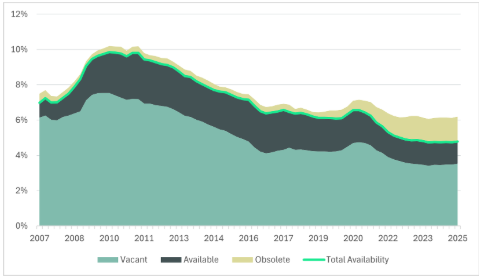
In its Q1 2025 research, CBRE noted that 4.8% of U.S. retail space was available. This is a handy reminder to double-check which storefronts are actually move-in ready.
Step 3: Assess Customer Demand and Preferences
Ask locals what they bought recently, what they paid, and what they wish was easier to find around town. Use these market research questions to whip up a quick survey for your target ZIP codes, and offer a small freebie or host a casual focus group to see which products, prices, or pickup options hit the mark.
Nick Wiese, regional vice president of Priority One Heating & Air Conditioning, leans on his residential HVAC background to balance urgent service calls with how far crews have to drive.
He says, “Before you add a territory, track how many customers book at your normal price and how long it takes to reach them. A full schedule loses its value if drive time eats up the day.”
Try out your offer before signing anything. Run geo-targeted ads to gather waitlist signups or preorders, check how local search interest stacks up for your industry, and host a weekend pop-up, trunk show, or mobile booth to see if people actually buy and come back.
| Test | What to Record | Decision It Informs |
|---|---|---|
| Survey or focus group | Recent purchases and what’s hard to find locally | Which offer to test first |
| Local ads | Waitlist signups and paid preorders | Which messages and ZIP codes are worth your budget |
| Pop-up or mobile unit | Total sales, average order size, and repeat customers | Whether local demand can support a permanent spot |
Set a clear minimum order goal before you run your test. Keep track of where buyers live, and separate full-price purchases from orders using a launch promo code.
A spicy rice bowl that flies off the counter in one neighborhood might need a milder twin across town—and retailers can test different sizes, colors, or bundles the exact same way. Lean on the SBA’s business guide to set up your test and make sense of the numbers.
Step 4: Evaluate the Business Environment and Regulations
Give the local planning office a call with the exact street address and explain how you plan to use the space. Ask about zoning, parking, signage rules, and occupancy limits, then check the SBA’s licensing and permits guide to see which agencies need to give you the green light.
- Get inspection wait times, health and safety rules, and any special permit requirements in writing.
- Look up state minimum wage laws and ask the city about any local rules on pay, shift scheduling, or paid leave.
- Have a contractor inspect the power, ventilation, and utilities before you start planning a kitchen or workshop build-out.
One restaurant group I know lost six whole months—while already paying rent—after finding out they couldn’t install a hood vent in a historic building. Loop in the city and a local architect early on, and connect with an advisor through America’s SBDC locator if you need introductions or a review of your permitting checklist. Ask the landlord when rent starts and which improvements require written consent.
Build Your Business. Get Grant Ready.
Take free expert-led courses and unlock access to tools, mentorship, networking, and Verizon grant opportunities for small businesses.
 We earn a commission if you make a purchase, at no additional cost to you.

Take free expert-led courses and unlock access to tools, mentorship, networking, and Verizon grant opportunities for small businesses.
Step 5: Seek Local Partnerships and Networking Opportunities
Neighboring business owners can give you the real scoop on slow seasons, while suppliers know which products sell out fast and when demand spikes. Local industry groups can warn you about common headaches, and nearby schools, clubs, and neighborhood associations can introduce you to the exact crowd you want to reach.
If you want to grow a local business partnership, pitch something simple and concrete, like a joint promo or a one-day collab event. For retail and food spots, reach out to the local chamber of commerce or business improvement district for foot traffic stats, big community event dates, and upcoming street construction before locking in your grand opening weekend.
Step 6: Conduct Financial Projections and Assess Financial Feasibility
Put together a month-by-month budget using real local quotes and numbers from your pilot test. Check LoopNet listings and talk to brokers for accurate rent estimates and triple-net costs (taxes, insurance, and maintenance). Factor in build-out and gear, an emergency buffer, local wages and benefits, shift schedules, launch promos, inventory wait times, and storage costs.
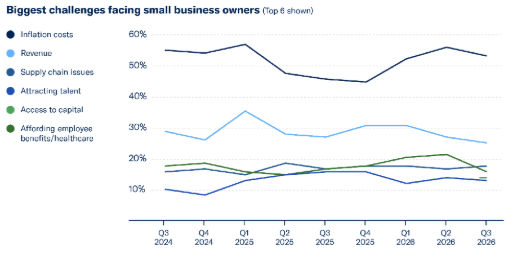
In a U.S. Chamber of Commerce and Ipsos survey, 54% of small business owners named inflation as one of their biggest headaches. The chart below tracks inflation alongside other top worries and reminds business owners to plan for rising costs and a slower-than-expected sales ramp-up.
Harris Ngheim, owner of Top Brokers, has guided multiple businesses through expansion-stage cash flow planning and has seen how often optimistic revenue assumptions sink a second location.
He says, “Owners build their second-location budget off their first store’s best month, not its average one. I tell clients to run their break-even math against the slowest month they’ve ever had, not the one they’re hoping for. If the numbers still work in a bad month, you have a real cushion. If they only work in a great one, you don’t have a plan, you have a bet.”
Use this startup financial playbook to map out your cash flow, and plug your numbers into the SBA’s break-even calculator to estimate how many sales you need to cover monthly costs. Include seasonality and check when the lowest cash balance occurs, even if break-even looks close.
Model a realistic, best-case, and worst-case scenario with the SCORE financial projections template. What happens if sales take 30% longer to pick up, or a major expense comes in 15% over budget? Pick a minimum cash safety net and decide ahead of time which expenses you can cut or pause if your balance dips below it.
Don’t forget to account for security deposits, opening inventory, and pre-opening payroll when calculating how much cash you’ll need. All of those bills can come due before you ring up your very first customer.
Step 7: Develop a Strategic Market Entry Plan
Zero in on the customer group and offer that performed best during your pilot test. Use the SBA Business Guide as a roadmap, and put specific team members in charge of each piece of your first 90 days.
- Run a soft launch during the busiest hours you spotted earlier, train your crew for those rush periods, and iron out any kinks before the grand opening.
- Line up neighborhood promos and partner events centered on the offer locals already loved.
- Check in every month on foot traffic, conversion rates, average order size, repeat visits, and how close you are to breaking even.
A specialty bakery I worked with tested a city two hours away by running two weekend pop-ups and taking online preorders. A local coffee shop helped spread the word, and a PTA fundraiser introduced them to neighborhood families during month one. Strong signup numbers, preorder sales, and repeat customers gave the owners the confidence to sign the lease, and by opening day, they already had regulars.
Conclusion
Get to know the locals and the economy. Scope out competitors and spot what they’re missing. Test real demand and neighborhood tastes. Clear the red tape early. Make friends with nearby owners. Build a budget tailored to this specific area—not a copy-paste of your first store. Then turn everything you learned into a smart launch plan.
Most importantly, give yourself permission to walk away. If people love what you offer but the math just doesn’t work, try running another test with a tweaked offer or look for a cheaper storefront before you sign on the dotted line.
This week, pull Census numbers for your top ZIP code, check out StartupNation’s guide to the art of the second location to prep for chats with three nearby business owners, and turn what you learn into a quick customer survey.
Image by lookstudio on Magnific