



Lead generation is expensive, but throwing more money at it rarely fixes the problem.
For founders and lean marketing teams, every dollar has to bring in prospects who are potential buyers. Shifting your focus to refining lead quality often reduces acquisition costs gradually.
In fact, companies with successful lead nurturing strategies generate 50% more sales-ready leads at a 33% lower cost, according to recent stats. The goal here is to attract the right leads, qualify them earlier, and spend your budget where it creates the biggest impact.
Let’s see how to lower customer acquisition costs without sacrificing lead quality.
How to Lower Acquisition Costs While Raising Lead Quality
1. Target people already showing buying intent
If your budget is tight, the fastest way to reduce acquisition costs is by reaching people who are already looking for what you sell. A smaller audience with stronger purchase intent can outperform a massive audience that’s only casually interested. The problem is that founders often make the mistake of chasing cheaper clicks when they should be chasing better-fit customers.
So, focus on-
- High-intent keywords instead of broad awareness terms
- Channels where customers actively compare products (Google Search, AI search, review sites, or niche communities)
- Retargeting visitors who viewed products or abandoned checkout before expanding into new audiences.
Let’s say you’re a DTC skincare brand. Rather than running broad Instagram campaigns targeting women interested in skincare, move your budget toward Google searches for terms like “best vitamin C serum for acne scars.”
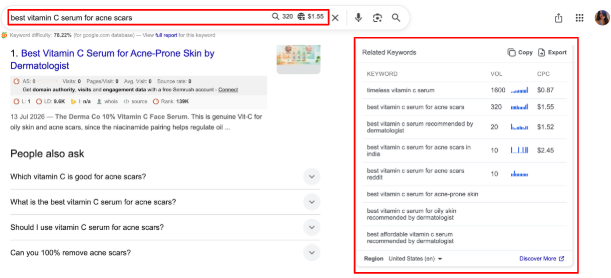
Traffic volumes may be lower, but visitors arrive with a clear purchase intent. That can mean fewer wasted clicks, higher conversion rates, and a lower acquisition cost for each customer.
2. Fix messaging before increasing spend
Before increasing your ad budget, take a closer look at what happens after someone clicks.
If your messaging doesn’t immediately answer why someone should choose your product, paying for more traffic will only amplify your problem. The right message helps qualified visitors recognize that your product solves the problem they already have.
Start by reviewing your landing pages from a customer’s perspective. Does the headline match the promise in your ad? Are the benefits obvious within a few seconds? Can visitors understand what sets your product apart without having to scroll endlessly? Even small improvements to your messaging and page experience can increase conversions without increasing ad spend.
Take Glossier’s latest Balm Dotcom product page as an example.
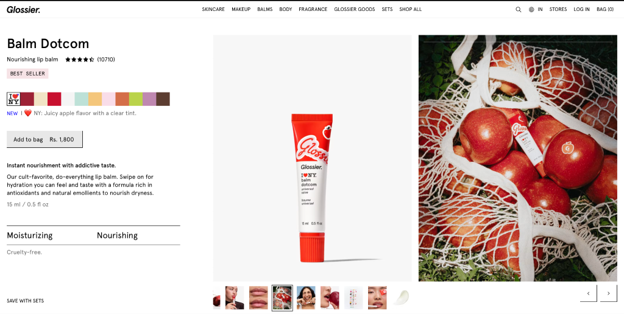
The page combines multiple product images, ingredient details, a 3-step “how to use” instruction, a “Get the Look” section, and 10,000+ customer reviews.
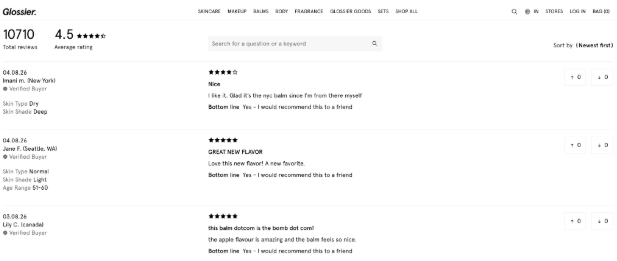
Instead of making shoppers search for answers, the page addresses common buying questions as they browse, so it’s easier to move from interest to purchase. That’s exactly the kind of friction you should remove before spending more to acquire additional visitors.
3. Build trust before asking for conversions
People don’t always buy the first time they discover a brand, so your job is to earn their confidence before asking them to check out.
As more customer-facing materials, from product descriptions to review replies and FAQs, get drafted with AI, it’s important to review them carefully. An AI detector can be one tool in that review process, but it should not replace human editing for accuracy, clarity, and a consistent brand voice.
- Add proof at every stage of the buying journey.
- For consistent customer experiences, consider supporting your team with a learning management system so everyone communicates your brand value consistently, right from marketing to customer support. An LMS can also make onboarding and product training much easier as your team expands.
Remember, trust comes from consistent signals across every touchpoint, like customer reviews, user-generated content, product demonstrations, transparent pricing, FAQs, guarantees, and clear return policies. That’s because shoppers can easily find answers to their questions before they have to ask.
Ruggable does this extremely well.
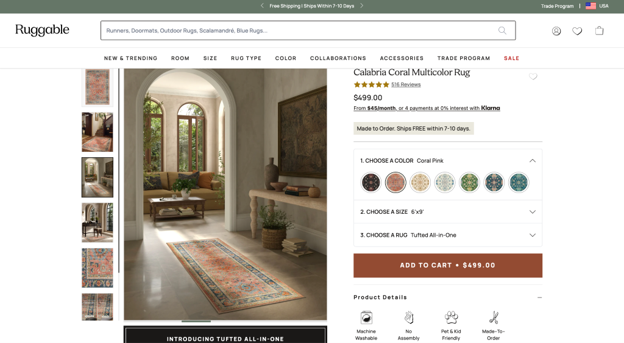
Along with detailed product photos and room previews, shoppers can filter and read hundreds of verified reviews on each product. Washability, sizing, and care instructions are all explained upfront, reducing hesitation before purchase.
You can take a similar approach without redesigning your entire store. Look for opportunities to reduce uncertainty before asking shoppers to buy. Consider these proven tactics to increase your ecommerce sales–
- Replace generic product photos with real-life images
- Surface customer reviews higher on the page
- Answer common objections to reduce the burden on your support team
- Add clear shipping, returns, and care information
- Test which trust signals have the biggest impact on conversions
Build Your Business. Get Grant Ready.
Take free expert-led courses and unlock access to tools, mentorship, networking, and Verizon grant opportunities for small businesses.
 We earn a commission if you make a purchase, at no additional cost to you.

Take free expert-led courses and unlock access to tools, mentorship, networking, and Verizon grant opportunities for small businesses.
4. Feed the ad platforms a better signal, not a bigger budget
Every ad platform optimizes toward whatever you’ve told it to count as a conversion. If your pixel fires on every email signup, Meta and Google will go find you more people who sign up for emails. They’ll do it efficiently, too. You’ll see a low cost per lead, a healthy-looking dashboard, and a pipeline full of people who wanted a discount code.
That isn’t the algorithm failing you. It’s the algorithm following an instruction you set months ago and never went back to check.
When paid performance dips, most founders reach for new creative or a bigger budget. Far fewer reopen the campaign settings to see what the platform is actually being scored on. It’s the least interesting lever in media buying and usually the one with the most slack in it.
Three things worth auditing before your next spend increase-
- Move your conversion event closer to revenue. Optimizing for “add to cart” trains the platform to find browsers. Optimizing for a purchase or a booked call trains it to find buyers.
- Send purchase value, not just purchase count. If the platform knows one order was $40 and another was $300, it can go looking for the second kind. Without value attached, every conversion looks identical, so it fetches you the cheapest one.
- Close the loop on what happened after the sale. Refunds and repeat orders are signals too. Skip them, and the algorithm keeps optimizing toward customers who returned the product.
Ray-Ban is a good example, and one you’ve almost certainly scrolled past on Instagram.
Pairing the Conversions API with the Meta pixel gave Ray-Ban 36% greater reach on Facebook and Instagram than the pixel alone, along with a 19% drop in cost per thousand views and a 7% drop in cost per conversion. Better data can help improve advertising efficiency.
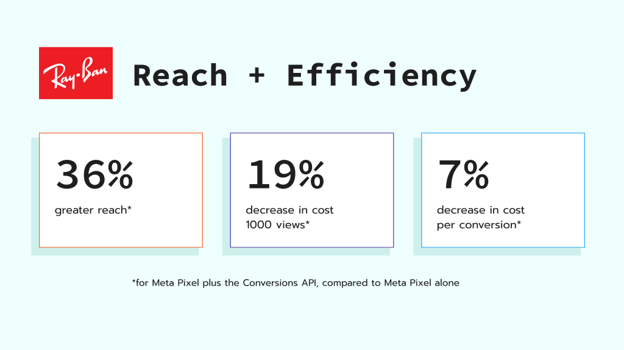
The lesson is to check whether your campaign signals reflect the outcomes that matter to your business.
5. Measure lead quality, not just acquisition cost
A low customer acquisition cost can look like a win, but if those leads never convert into paying customers, what’s the point?
If you’re only measuring how much it costs to generate a lead, you’re missing the bigger picture. The real goal is to attract people who will buy, return to your brand, and contribute to long-term revenue.
That’s why, as your business grows, look beyond metrics like clicks and cost per lead. Track how many leads become qualified opportunities, how many complete a purchase, and which acquisition channels consistently bring in your highest-value customers. You may find that a channel with a higher acquisition cost actually delivers stronger conversion rates and a better return on investment in the long run.
Remember- don’t optimize for cheaper leads; optimize for better customers.
Jones Road Beauty is a good case study for this point. As customer acquisition through paid social became more expensive, the brand expanded into connected TV instead of simply trying to lower its cost per click on Meta.
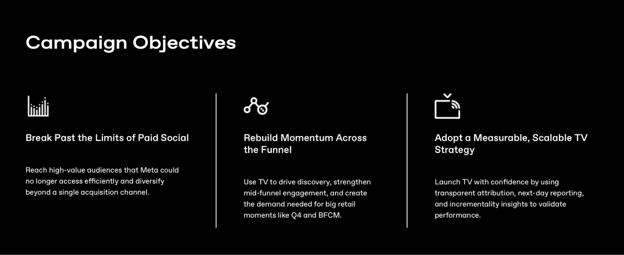
After launching TV campaigns, the brand saw higher site traffic, stronger Meta performance, more first-time visitors, and a significant increase in branded searches. Even in-store customers reported discovering the brand through TV first.
Rather than judging success by acquisition costs alone, Jones Road Beauty evaluated which channels were bringing in qualified audiences and improving their business performance. That’s the kind of broader measurement you should aim for when deciding where your marketing budget goes.
6. Make existing customers your cheapest channel
Most founders run acquisition and retention out of separate budgets, and retention usually loses. It’s the less exciting of the two. But repeat purchase rates are worth monitoring.
But customers referred by existing buyers may arrive without additional media spend, and they may already have greater confidence in your brand, because someone they trust already answered the objections your landing page was working so hard to handle.
A few practical moves-
- Ask for the referral at the moment of highest satisfaction, right after delivery or first use, not in next month’s newsletter
- Make the reward worth mentioning. A 10% coupon isn’t something anyone brings up to a friend.
- Turn your best customers into creative. Their photos and reviews can strengthen paid campaigns.
- Give people something to talk about that isn’t a discount, like packaging, a handwritten note, or an unusually painless return
Zerodha, now India’s largest stock brokerage, built this in before it had customers. The first two tools on the site were a brokerage calculator and a referral calculator, the second one showing you what you’d earn by bringing ten people along.
Founder Nithin Kamath estimates referrals became about a quarter of new business, and his team puts the real number closer to 40% once you count the people who heard about it from a friend but never touched a referral link.
His reasoning for skipping ads entirely is the part worth sitting with. Once you’ve spent a thousand or two to acquire someone, the business gets wired to earn that money back, and most of the ways to do that are bad for the customer. The acquisition cost doesn’t just drain your budget. It quietly changes how you treat the person you bought.
Final Thoughts
You don’t always need a bigger budget to improve your results. More often, it comes down to making better decisions with the traffic you already have.
You can start by auditing one acquisition channel instead of all of them. Review your top-performing landing page from a first-time shopper’s perspective and add or remove details accordingly. Then look at your analytics to see which channels bring in customers who convert, not just the lowest cost per click. Small improvements in these areas compound gradually and help you attract quality customers without increasing your spend.
For more founder-focused strategies, start here; start now.
Image by DC Studio on Magnific